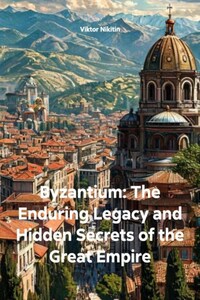
For over a thousand years, it was a cultural and strategic bridge between continents, a living continuation of Rome and a shield for Europe.
The Byzantine Empire’s unparalleled longevity, spanning more than a millennium, stands as a testament to its extraordinary ability to endure, adapt, and influence the course of world history. It was neither a mere relic of the ancient Roman world nor a stagnant civilization locked in the past. Instead, Byzantium emerged as a dynamic and resilient political and cultural entity, embodying the complex interplay of continuity and change, synthesis and innovation.
Foundation and Geopolitical Significance
Founded as Constantinople in 330 AD by Emperor Constantine the Great, the city was deliberately positioned on the strategic Bosporus strait, controlling the gateway between the Mediterranean and the Black Sea. This choice was not accidental; it reflected a vision to establish a "New Rome" that would command trade routes, secure military advantage, and assert Christian imperial authority. Constantinople’s natural harbor, formidable walls, and access to key resources made it an impregnable fortress city and a vibrant center of commerce and culture.
Byzantium sat astride the boundary between Europe and Asia, functioning as a bridge—not only geographically but also culturally, religiously, and economically. It connected the Latin West with the Greek East, the Christian world with the Muslim caliphates, and the ancient world with the emerging medieval order. Merchants from Venice, Alexandria, Baghdad, and beyond brought goods, ideas, and religions to its bustling markets, turning the city into one of the most cosmopolitan urban centers of its time.
Cultural Synthesis and Intellectual Vitality
The Byzantine Empire was the crucible where Greco-Roman heritage merged with Christian theology and Near Eastern traditions, producing a civilization unique in its depth and complexity. Byzantine education fostered the study of classical texts—philosophy, rhetoric, medicine, and history—while simultaneously promoting Christian learning. This synthesis gave rise to remarkable scholars such as John of Damascus, whose theological works bridged classical philosophy and Christian doctrine.
The empire's artistic achievements reflect this cultural amalgamation. The mosaics of Ravenna, the icon paintings of Mount Athos, and the architectural innovations of Hagia Sophia exemplify a spiritual and aesthetic worldview that sought to express divine mystery through grandeur and symbolism. These works inspired both Orthodox Christianity and Western art, leaving a lasting impression on the Christian world.