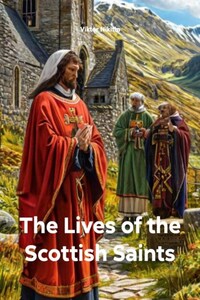
Lives of the Scottish Saints Celebrated in January
1 – St. Ernan:
St. Ernan, a disciple and likely the nephew of St. Columba, is remembered for his holiness and his connection to the great monastic traditions of Ireland and Scotland. Although his exact work in Scotland is unclear, he may have served there for a time under St. Columba. He later became Abbot of Drumhome in Donegal. On the night St. Columba died, Ernan received a vision revealing the saint’s passing. He died at Drumhome in 640 at an advanced age. Churches in Ross-shire and Mull preserve his name.
4 – St. Chroman:
Very little survives about St. Chroman because so many church records were destroyed during the Reformation. What is known is that he lived in Cunningham, Ayrshire, where he was respected during life and honored after death for his great holiness. As he lay dying, he repeatedly prayed the words of Psalm 83: “My soul longs and faints for the courts of the Lord. My heart and my flesh rejoice in the living God.”
7 – St. Kentigerna:
St. Kentigerna was of Irish noble birth. Her brother, St. Comgan, ruled their father’s territory in Leinster with fairness, but political hostility forced him into exile. Kentigerna, widowed, fled with him to Scotland. Comgan entered monastic life, while Kentigerna embraced the life of a solitary anchoress on an island in Loch Lomond—now known as Innis na Caillich (“Nun’s Island”). There she lived many years in prayer and austerity. The island became the site of the old parish church of Buchanan, dedicated to her. She died in 733, and her feast appears in the Aberdeen Breviary.
11 – St. Suibhne (Sweeney):
St. Suibhne was an abbot of Iona who led the monastery for about three years. He died in great holiness in 656.
14 – St. Kentigern (St. Mungo):
St. Kentigern—more widely known by the affectionate name “Mungo,” meaning “dear one”—was born around 518 of royal blood. Educated by a hermit named Serf at Culross, he later settled at Cathures (now Glasgow), gathering disciples who lived under a monastic rule. Though reluctant, he was made bishop and governed his flock with great zeal. He lived simply, practiced severe self-denial, and remained deeply prayerful.
Driven into exile by an unjust king, he took refuge with St. David in Wales and later founded a monastery at what became St. Asaph’s, where hundreds lived under his discipline. Eventually recalled to Glasgow, he spent the rest of his life preaching, teaching, and strengthening the Christian faith. He died on January 14 in extreme old age, having received the sacraments and urged his followers to charity, peace, and obedience to the Church. His body rests in what is now the crypt of St. Mungo’s Cathedral in Glasgow.